






Humanity and complexity
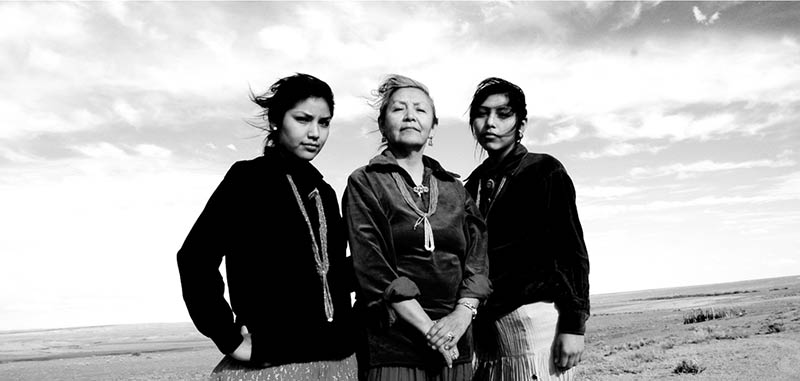
Blackhorse Lowe's 15-minute film "Shimásání" follows a young Navajo girl in the late 1920s who must decide whether to retain her traditional lifestyle or seek a new life. (Courtesy photo - Smithsonian Institution)

‘Diné Spotlight’ to show accurate picture of what it really means to be Native
Blackhorse Lowe’s 15-minute film “Shimásání” follows a young Navajo girl in the late 1920s who must decide whether to retain her traditional lifestyle or seek a new life. (Courtesy photo – Smithsonian Institution)
NEW YORK CITY
When it comes to movies, much can be said about aspect ratios and picture quality, but regardless of a movie screen’s height and width, the picture itself is still flat.

In Nanobah Becker’s film “Sixth World,” Navajo astronauts journey to Mars. (Courtesy photo – Smithsonian Institution)
That’s especially true when it comes to most mainstream films about American Indians, according to Angelo Baca, a Navajo filmmaker and graduate student at New York University.
The National Museum of the American Indian is trying to change that with a two-day film screening featuring two full-length films and 17 shorts.
The free event, “Diné Spotlight: A Showcase of Navajo Film,” runs April 9 and 11 at the museum’s George Gustav Heye Center in New York. A total of 14 Navajo filmmakers will have their work shown, with topics ranging from love stories to science fiction to the gritty, hard-hitting stories of modern life on the reservation.
The combination, Baca said, should leave spectators with a more accurate picture of what it means to be Native.
“These films bring complexity and dimension to an otherwise one-dimensional and conflated representation of Native Americans,” Baca said. “They cover a wide range of things that people don’t necessarily associate with Native Americans. They show how much humanity and complexity we have as people.”
[wbcr_snippet id=”38767″]
